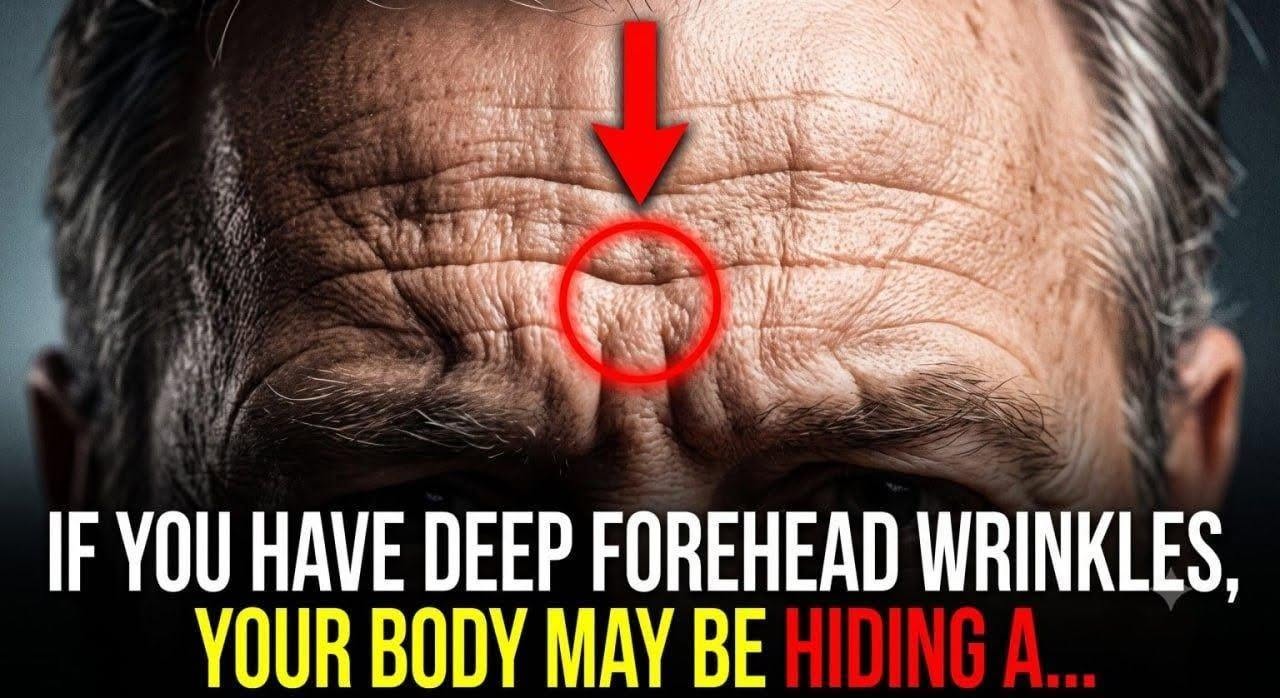
When we look in the mirror and notice a new wrinkle, our immediate reaction is usually vanity-driven. We rush to buy expensive anti-aging creams, book Botox appointments, or research collagen supplements. Wrinkles, particularly those on the forehead, are universally accepted as the inevitable badges of time, stress, and repeated facial expressions. However, groundbreaking medical research has recently uncovered that the deep grooves etched into your forehead might be telling a story far more serious than how many times you’ve raised your eyebrows.
According to a massive, long-term study presented at the European Society of Cardiology (ESC) Congress, deep, premature vertical and horizontal forehead wrinkles are strongly linked to a significantly higher risk of dying from cardiovascular disease.
The ESC Landmark Study
The research that shifted the medical community’s perspective on facial wrinkles was not a small, isolated observation. The study tracked over 3,200 healthy working adults for a period of 20 years. At the beginning of the study, researchers assessed the participants’ forehead wrinkles, assigning them a score from zero (no wrinkles) to three (numerous deep wrinkles).
Over the next two decades, the researchers monitored the participants’ cardiovascular health. The results were staggering. Participants with a wrinkle score of two or three had almost 10 times the risk of dying from a cardiovascular event compared to those with a score of zero, even after adjusting for age, gender, education, smoking status, blood pressure, heart rate, diabetes, and lipid levels.
