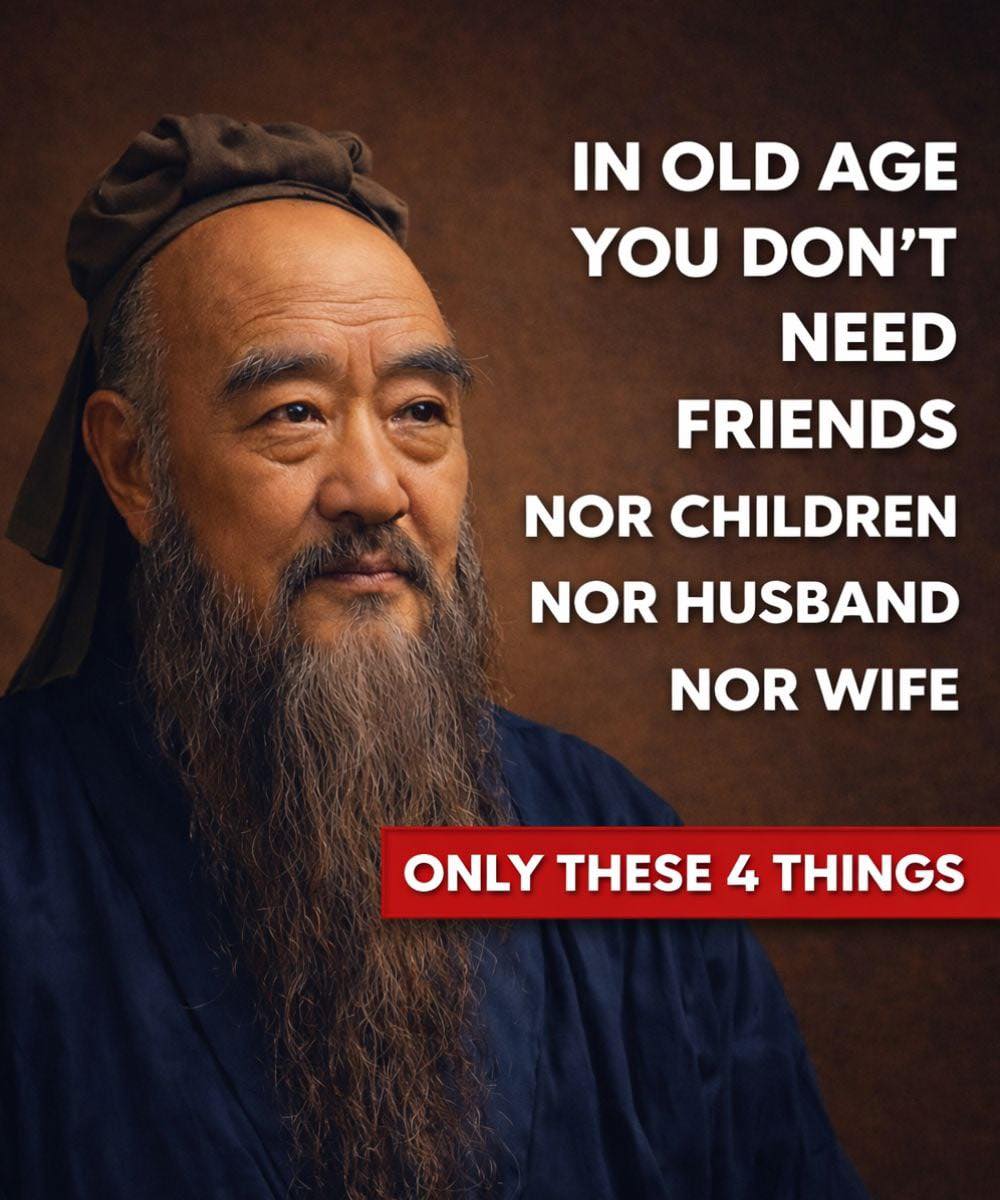
4 Principles Attributed to Confucius to Build a Fuller and More Balanced Old Age
Aging is a natural stage of life that brings both challenges and opportunities. While many people focus on the physical aspects of growing older, wisdom traditions throughout history remind us that a meaningful old age is built on much more than health alone. Emotional balance, purpose, relationships, and personal growth all play essential roles.
The ancient Chinese philosopher Confucius offered timeless teachings about how to live a virtuous and harmonious life. Although his ideas were written more than two thousand years ago, many of them still resonate today—especially when it comes to building a fulfilling and balanced later life.
Here are four key principles inspired by his philosophy that can help guide people toward a richer and more peaceful old age.
1. Cultivate Lifelong Learning
One of the most famous ideas associated with Confucius is the belief that learning should never stop. He taught that education and self-improvement are lifelong pursuits, not limited to youth.
For older adults, this principle can be especially powerful. Continuing to learn keeps the mind active and engaged with the world. It can also provide a sense of purpose and curiosity that enriches everyday life.
Learning in later years might include:
-
Reading books or exploring new subjects
-
Taking community classes or online courses
-
Learning a language or musical instrument
-
Developing creative hobbies like painting or writing
Mental stimulation helps maintain cognitive health while also keeping life interesting and meaningful.
As Confucius suggested, wisdom grows through reflection and continuous discovery.
2. Value Relationships and Family Harmony
Confucian philosophy places great importance on family and social harmony. According to Confucius, strong relationships form the foundation of a stable and fulfilling life.
As people grow older, maintaining close connections with family, friends, and community becomes even more important. Social bonds provide emotional support, reduce feelings of isolation, and contribute to overall well-being.
Building strong relationships may involve:
-
Spending meaningful time with family members
-
Maintaining friendships and social networks
-
Offering guidance and wisdom to younger generations
-
Participating in community or volunteer activities
Confucius believed that kindness, respect, and mutual care strengthen society and enrich personal happiness.
In later life, nurturing these connections can bring deep satisfaction and a sense of belonging.
