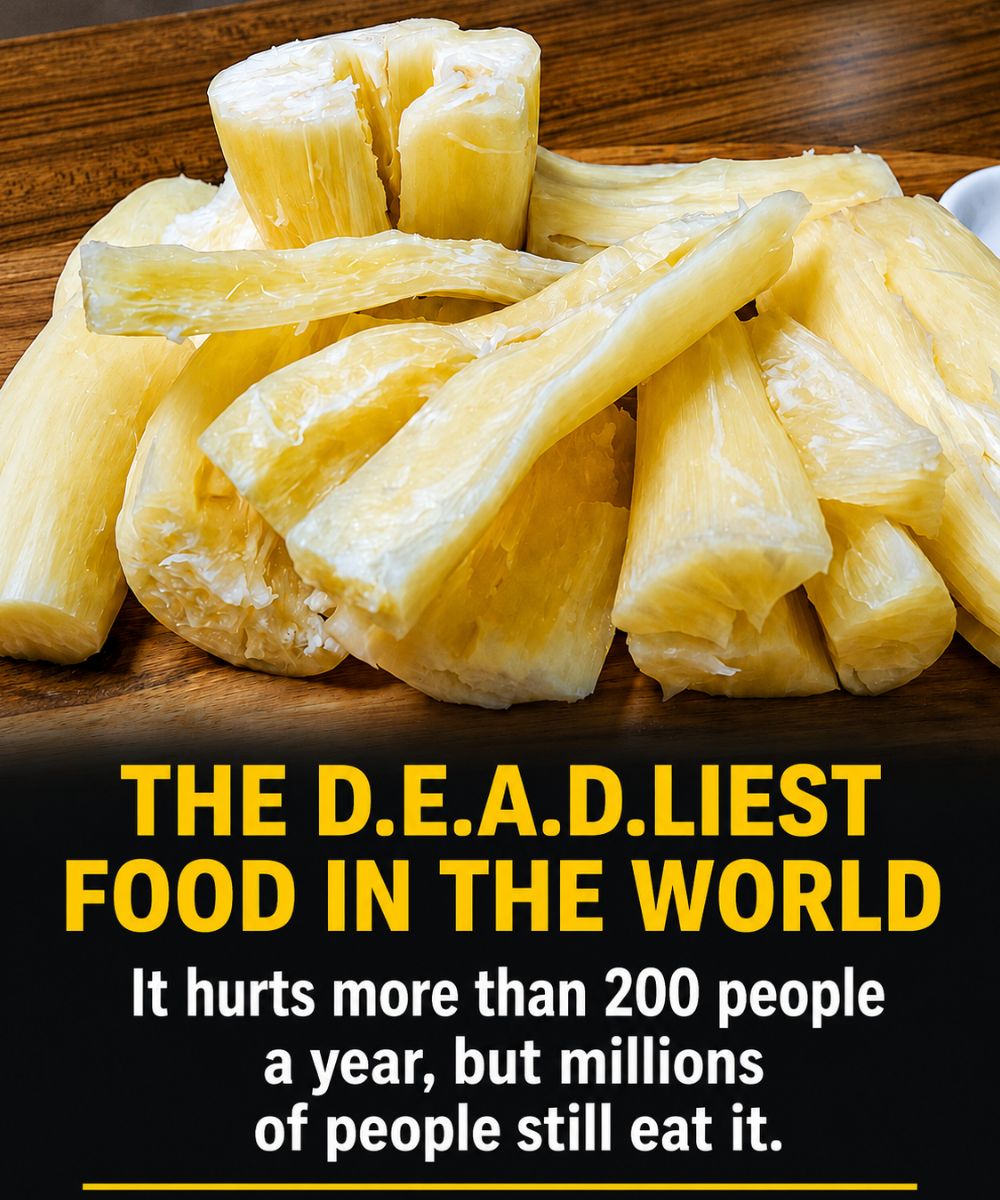
The “Deadliest Food in the World”? Understanding the Truth Behind Cassava
Social media and sensational headlines often describe certain foods as “the deadliest in the world,” shocking millions of readers with dramatic claims. One food that frequently appears in these discussions is cassava, a starchy root vegetable eaten by hundreds of millions of people worldwide. While cassava is an important source of nutrition in many countries, experts warn that improper preparation can make it dangerous under certain conditions.
Cassava, also known as yuca or manioc, is a root crop commonly grown in parts of Africa, South America, and Asia. It is valued for its ability to grow in difficult climates and poor soil conditions, making it a major food staple for many communities. Rich in carbohydrates, cassava provides energy and can be used in a wide variety of dishes, from flour and bread to chips and soups.
However, what many people do not realize is that raw cassava naturally contains compounds called cyanogenic glycosides. When the plant is damaged, chewed, or improperly processed, these compounds can release cyanide, a toxic substance that can be harmful to humans in large amounts.
Doctors and food safety experts explain that consuming improperly prepared cassava may lead to serious health problems, including poisoning. Symptoms can range from dizziness and stomach pain to breathing difficulties and, in severe cases, death. According to health organizations, hundreds of people around the world suffer from cassava-related poisoning each year, especially in areas facing food shortages where proper preparation methods may not always be followed.
Despite these risks, millions of people continue to eat cassava safely every day. The key difference lies in preparation. Traditional cooking methods developed over generations are designed specifically to remove or reduce toxic compounds. Peeling, soaking, fermenting, drying, and thoroughly cooking cassava all help make it safe for consumption.
There are also two main types of cassava: sweet cassava and bitter cassava. Bitter cassava contains higher levels of toxic compounds and requires more careful processing. In many regions, experienced cooks understand exactly how to prepare the root safely before serving it.
