Does Sleeping on Your Right Side Help or Worsen Snoring?
Snoring is a common sleep issue that affects millions of people around the world. While it is often harmless, it can disturb sleep quality and disrupt partners or family members sharing the same space. Many people try different solutions to reduce snoring, from special pillows to lifestyle changes. One simple factor that often gets overlooked is sleeping position.
A common question people ask is whether sleeping on the right side helps reduce snoring or actually makes it worse.
What Causes Snoring?
Snoring happens when the flow of air through the mouth and nose is partially blocked during sleep. When air struggles to pass through narrowed airways, the surrounding tissues vibrate, producing the familiar snoring sound.
Several factors can contribute to this airway narrowing, including:
-
Relaxed throat muscles during sleep
-
Nasal congestion or allergies
-
Being overweight
-
Sleeping on the back
-
Alcohol consumption before bedtime
Your sleeping position can significantly influence how open or restricted your airway becomes during the night.
The Role of Sleeping Position
Among different sleeping positions, lying on the back is often the biggest contributor to snoring. When you sleep on your back, gravity pulls the tongue and soft tissues of the throat backward. This can partially block the airway and increase the chances of snoring.
Sleeping on the side, on the other hand, helps keep the airway more open. This is why many sleep experts recommend side sleeping as one of the simplest ways to reduce snoring.
Does the Right Side Make a Difference?
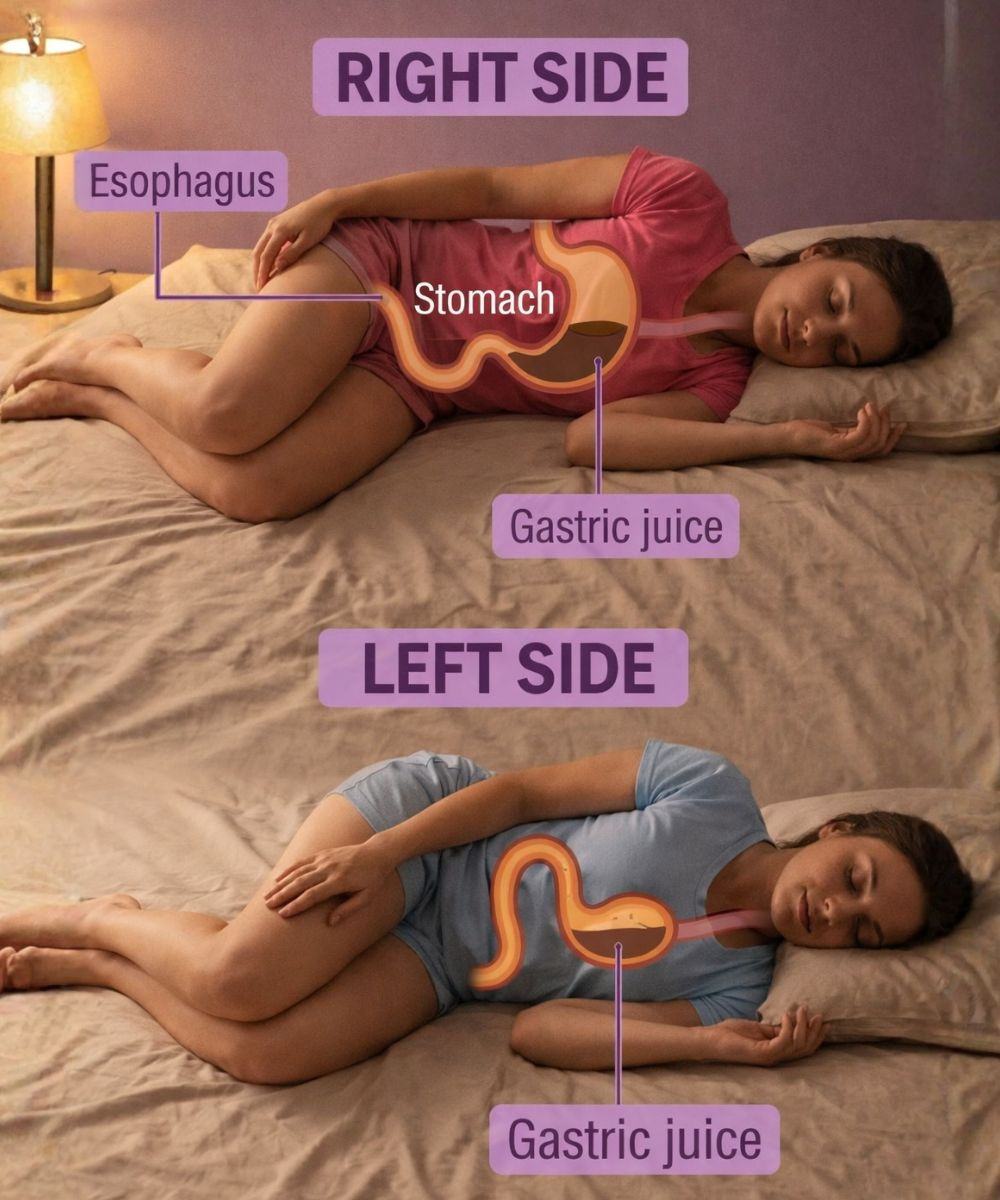
In general, sleeping on either side—left or right—can help reduce snoring compared to sleeping on your back. However, sleeping on the right side may offer additional benefits for some people.
When lying on the right side, gravity helps keep the tongue from collapsing backward into the throat. This can allow air to flow more freely through the airway, which may reduce vibrations and decrease snoring.
That said, the difference between the right and left side is usually small. The most important factor is simply avoiding sleeping on your back.
