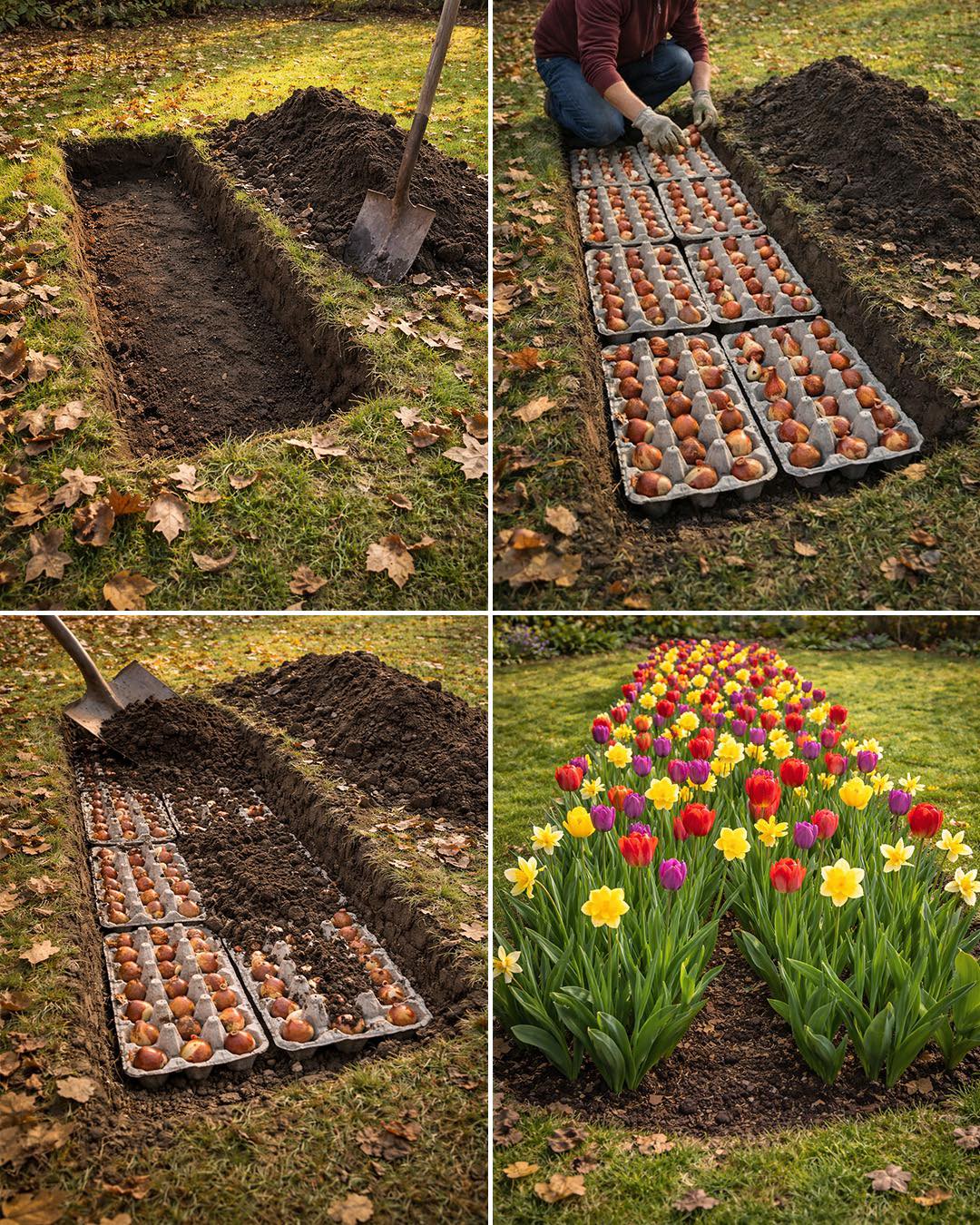
4. Position Bulbs Correctly
Always place bulbs:
- Pointed end upward
- Flat or root end downward
If unsure, plant sideways—bulbs can self‑correct.
5. Water Thoroughly After Planting
Water deeply once after covering the trench. This:
- Settles soil around roots
- Removes air pockets
- Activates root growth
Avoid constant watering during winter unless the soil becomes very dry.
6. Mulch for Protection
Add a light layer of:
- Straw
- Dry leaves
- Wood chips
This stabilizes temperature and prevents soil erosion.
7. Avoid Fertilizing Too Early
Apply bulb fertilizer or compost:
- At planting time (lightly)
- Or in early spring when shoots appear
Too much nitrogen encourages leaves instead of flowers.
8. Leave Foliage After Blooming
Do not cut green leaves immediately.
They feed the bulb for next year’s bloom. Remove leaves only after they turn yellow and dry.
Common Mistakes to Avoid
- Planting too shallow
- Using plastic cartons
- Overwatering in winter
- Planting damaged bulbs
- Heavy clay soil without drainage
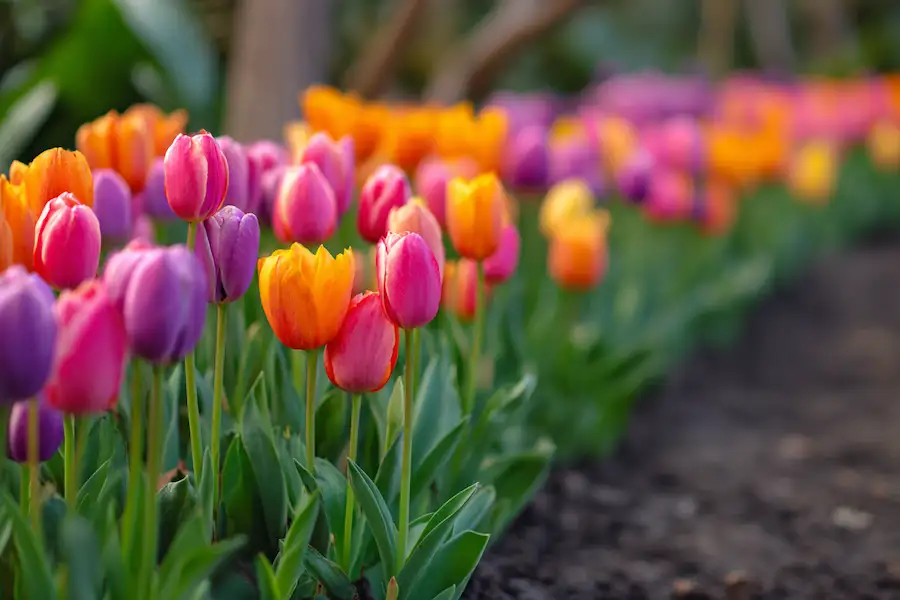
The egg carton trench method is an efficient, beginner‑friendly way to plant large numbers of bulbs neatly and reliably. It saves time, improves spacing accuracy, and produces uniform, professional‑looking flower beds with minimal effort.
Whether planting tulips, daffodils, crocuses, or summer bloomers, this technique offers a practical blend of simplicity and effectiveness—perfect for home gardeners who want beautiful results without complicated tools or measurements.
With good bulbs, proper depth, and healthy soil, this method can deliver dense, colorful blooms year after year.
